Most people treat their robot vacuum like a simple cleaning appliance. They buy whatever is on sale, plug it in, and let it roam around their house. As a network engineer, I see it very differently. A modern robot vacuum is actually a mobile Linux computer equipped with high definition cameras, sensitive microphones, and LiDAR sensors.
If the manufacturer does not prioritize network security, you are essentially letting a stranger roam your hallways with a live video feed of your family.
The February 2026 DJI Romo Disaster
If you think this is just theoretical paranoia, let me tell you what happened in February 2026. The cybersecurity world watched a massive disaster unfold with the new DJI Romo robot vacuum.
A security researcher named Sammy Azdoufal was simply trying to modify his own personal robot. He wanted to see if he could drive it around his house using a standard PS5 controller. During his experiments, he discovered a catastrophic backend permission flaw in the DJI servers. By total accident, he gained full access to nearly 7000 other DJI Romo robots located in homes all around the world.
Thankfully, Sammy is an ethical researcher. He did not use this access for malicious purposes and reported the flaw responsibly. You can read the full terrifying technical breakdown on [this external cybersecurity report]. But imagine if a malicious group of hackers had found that backdoor first. They would have live camera feeds from 7000 living rooms.
The Black Tape Confession
I have to confess something. I actually own an Ecovacs Deebot, which is another brand known for terrible software vulnerabilities. When I bought it, I thought I was getting a great deal on a high end appliance. I had absolutely no idea that this company had a major security flaw with their cameras.
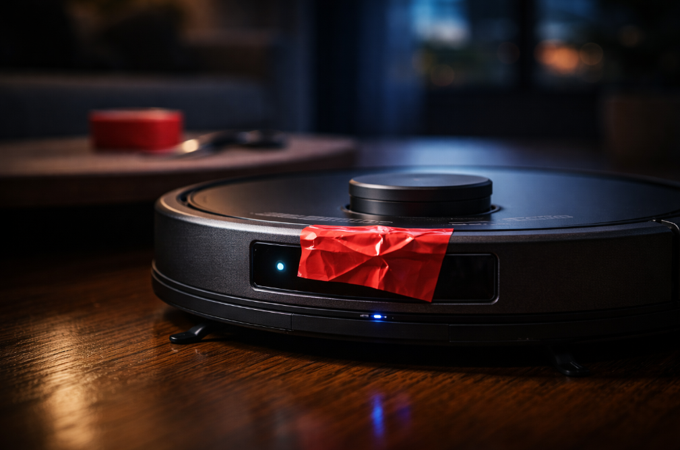
The moment I read the reports about hackers accessing these devices, my first reaction was not elegant network engineering. It was pure panic. My immediate physical fix was simple: I grabbed a piece of black electrical tape and covered the camera lens. Sometimes, the best tech solution is a physical barrier. You cannot hack a piece of tape.
The Physical vs Digital Dangers
We have already talked about the physical dangers these machines pose to your home. As I mentioned in my previous article:
“If you want to avoid a massive mess on your living room rug, you need a vacuum that actually understands what is in front of it.” Read my complete guide on Robot Vacuum Pet Safety Tips.
But tape and obstacle avoidance only solve half the problem. You still need to secure the digital side of your network.
Transparency Note: This article contains affiliate links. As an Amazon Associate, I earn from qualifying purchases at no extra cost to you. This helps support the blog.
The Heroes: Samsung and iRobot
When you pay a premium for a top tier brand like Samsung or iRobot, you are not just buying better suction power. You are buying hardware level encryption.
These companies understand that your floor plan is private data. They use dedicated security chips to process images locally. This means the video of your living room never actually leaves the robot. Even if their cloud servers were compromised in a cyber attack, your private maps remain fully encrypted on the physical device itself. Furthermore, brands like iRobot hold official TUV and ETSI security certifications, which are the absolute gold standard for IoT safety.
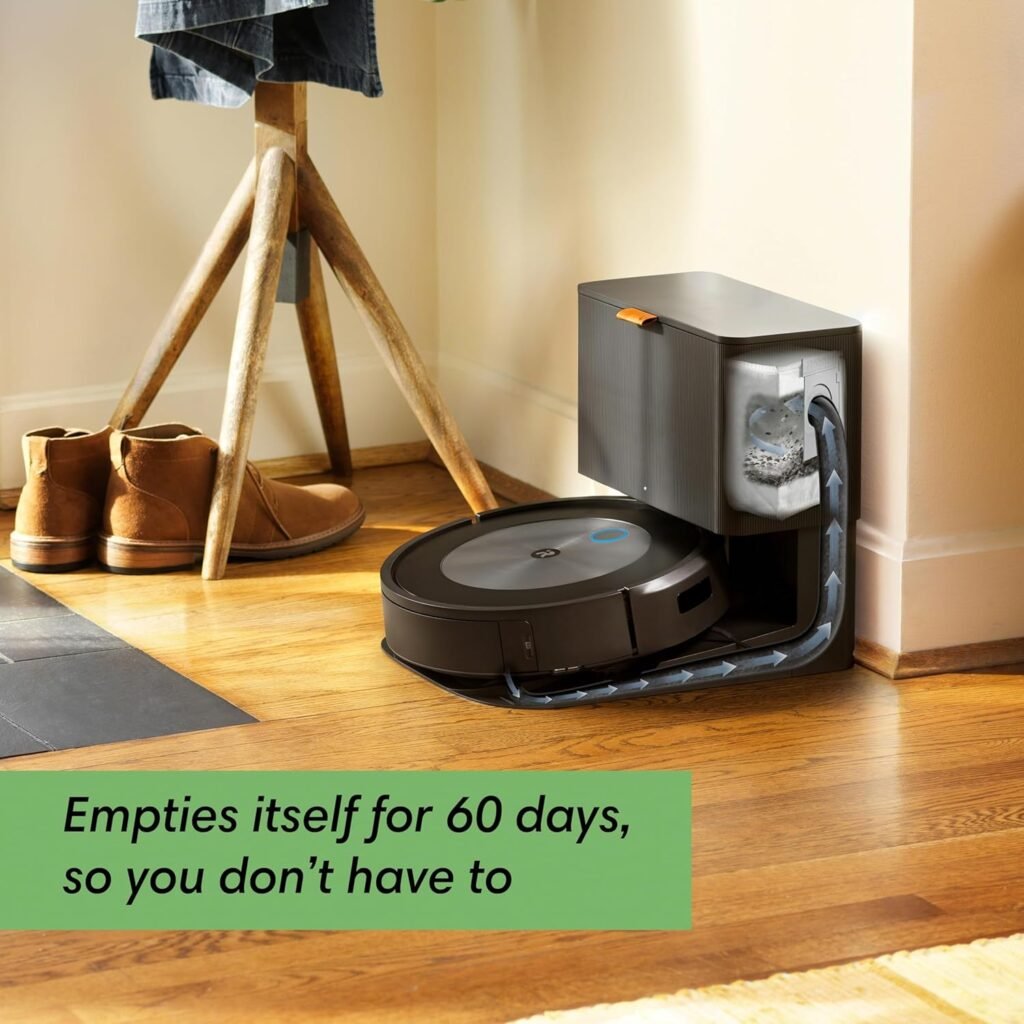
iRobot Roomba j7 Plus
The perfect middle ground for smart homes. It features the exact same local processing for maximum privacy but focuses heavily on avoiding obstacles like tangled cords or pet waste. It is an absolute beast on thick carpets and includes the self emptying base so you can completely ignore it for months.
Samsung Jet Bot Plus
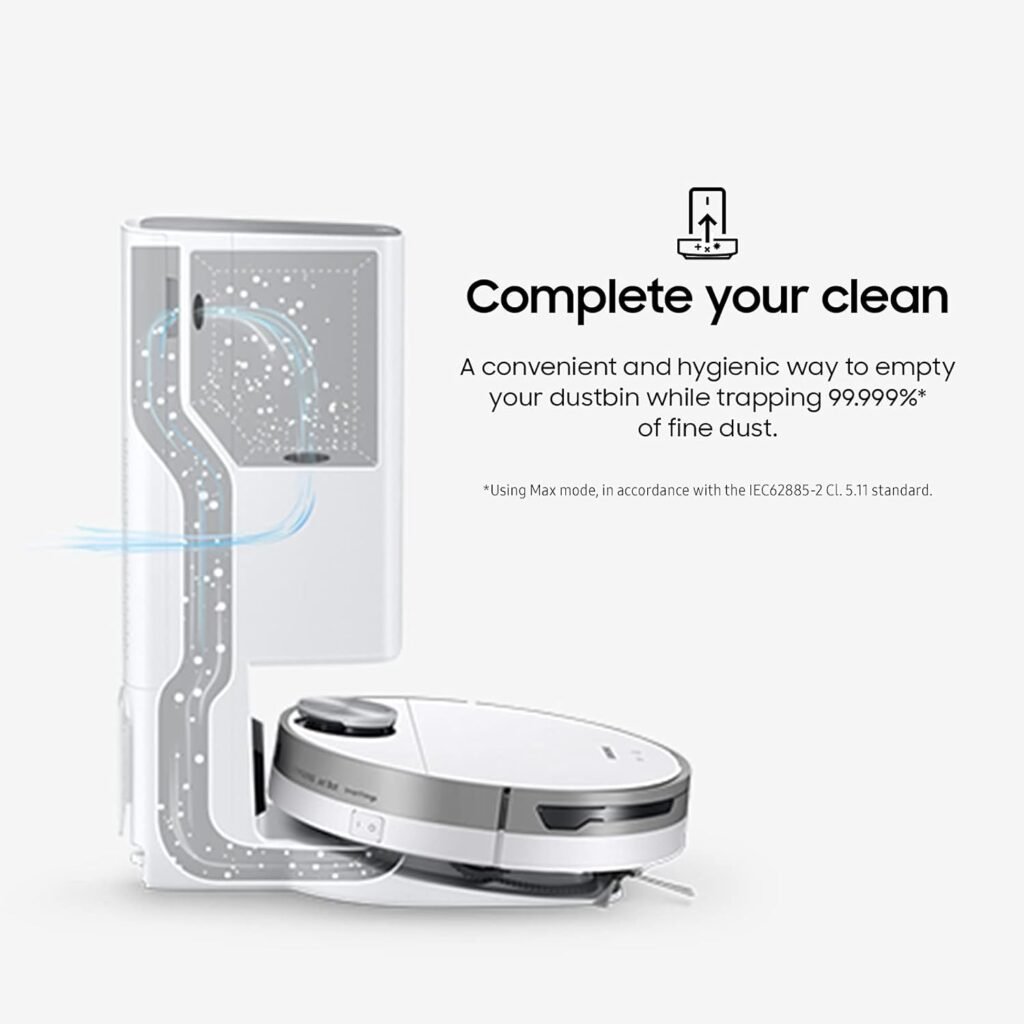
If you want maximum security by having zero cameras in your house, this is your machine. It relies entirely on highly accurate LiDAR sensors to map your floor plan locally. It delivers massive suction power for hard floors and deep crevices, and since there is no optical lens, hackers have absolutely nothing to spy on.
The Villains: Brands That Ignore Your Privacy
On the other side of the spectrum, we have brands like Ecovacs and DJI. As the Romo incident proved, treating user privacy as an afterthought leads to disaster. Recent cybersecurity reports have shown that several models from these manufacturers had zero day vulnerabilities that were left unpatched for far too long.
In some documented cases, the Bluetooth connection could be bypassed easily by anyone standing outside your front door with a laptop. If a tech company does not respond to a security researcher within 24 hours to patch a critical flaw, they absolutely do not deserve to map the inside of your home.
Technical Security Comparison
| Security Feature | iRobot Roomba J9+ | Samsung Jet Bot AI+ | Ecovacs Deebot X2 | DJI Romo |
| Image Processing | Local (On device chip) | Local (Intel AI chip) | Cloud based (Server dependent) | Cloud based (Server dependent) |
| Encryption Type | AES 256 Hardware Level | AES 256 Hardware Level | Software only | Software only (Backend flaws reported) |
| Microphone Privacy | Physical Hardware Cut | Software controlled | Software controlled | Software controlled |
| Security Certification | ETSI EN 303 645 and TUV | UL Solutions Verified | No official certification | No official certification |
Important Security Disclaimer: The security specifications, architecture details, and vulnerability reports listed in this article are based on publicly available data, independent cybersecurity research, and official manufacturer documentation as of March 2026. Technology companies frequently update their device firmware and backend server architecture. Therefore, these software features and security protocols may change over time. This technical comparison is provided for educational purposes only. Always verify the latest security patches and privacy policies directly with the manufacturer before connecting any smart home camera to your private network.
Joe’s Practical Fix: The Guest Wi Fi Strategy
What happens if you already own a villain brand and cannot return it? First, use the tape trick. Second, protect your main network using a simple engineering rule.
NEVER CONNECT an IoT device to the same Wi Fi network as your personal laptop, your smartphone, or your network attached storage. You must always use a Guest Wi Fi network or set up a dedicated IoT VLAN on your router.
This creates a digital brick wall inside your house. If your cheap robot vacuum is compromised by a hacker, they will be trapped on the guest network. They cannot jump over the digital wall to access your private work files or your bank accounts.
The Hardware Upgrade You Need
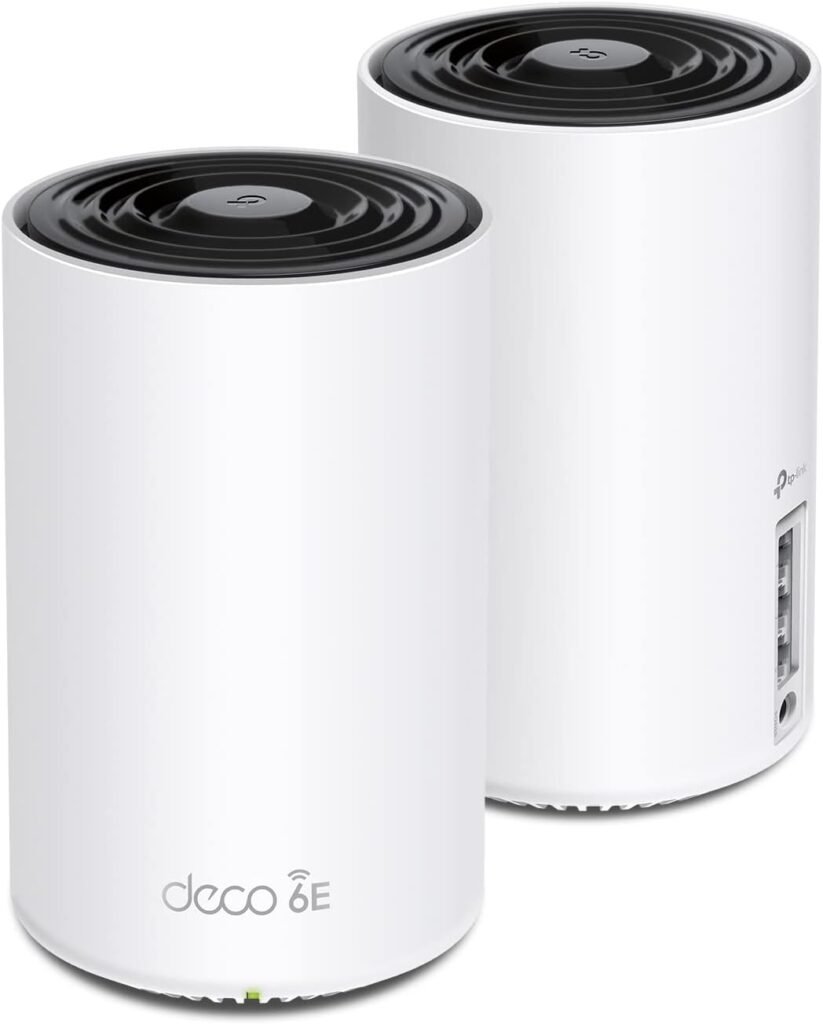
If your current ISP provided modem does not allow you to create a separate Guest Wi Fi network, it is time for a hardware upgrade. I highly recommend replacing it with a modern mesh system like the TP Link Deco XE75 or a prosumer router like the Ubiquiti UniFi Express. Both of these devices allow you to isolate your smart home gadgets with one tap on your smartphone app.
TP Link Deco XE75 Mesh System The ultimate networking upgrade to create that secure Guest Wi Fi network we talked about. It handles dozens of smart devices effortlessly and keeps your private computers physically separated from your automated gadgets.
Engineer’s Verdict
“For 2026, the security gap has widened. While brands like iRobot process images locally on a dedicated chip, budget competitors continue to upload unencrypted map data to overseas servers. The DJI Romo incident proves that cloud based robots are a massive liability. For a privacy first home, local processing is non negotiable. If the brand does not have a transparent vulnerability disclosure policy, do not let it cross your doorstep.”