
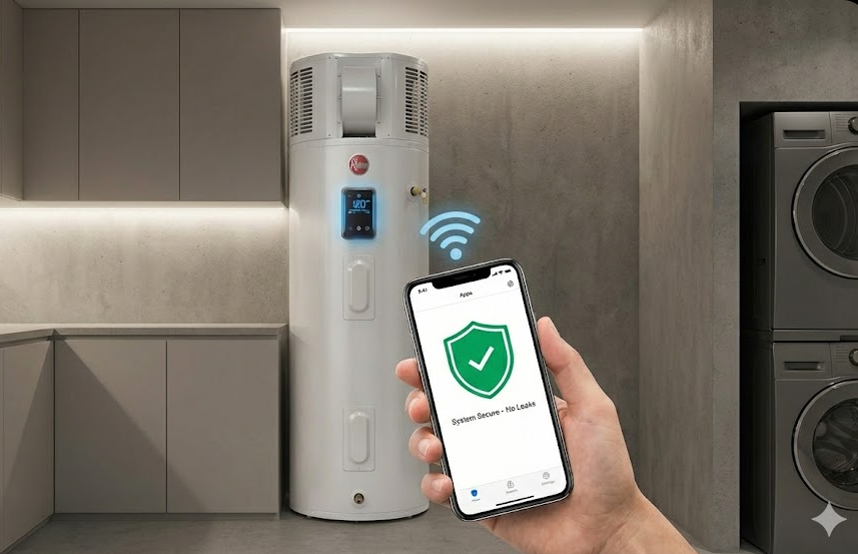
Every winter, homeowners with electric water heaters dread the same thing: The January Electric Bill. Heating icy cold water from the street takes a massive amount of energy. It’s usually the second biggest expense in your house, right after your furnace.
So when I replaced my old tank with a Rheem ProTerra Hybrid (Heat Pump) water heater, my neighbors called me crazy. “A Heat Pump? In Maryland? It’s going to freeze! It won’t work in the winter!”
They were wrong. Not only did it work through a 20°F blizzard, but it also crushed my electric bill.
Here is the real data from a freezing month using a “Smart” Hybrid Water Heater.
Transparency Note: This article contains affiliate links. As an Amazon Associate, I earn from qualifying purchases at no extra cost to you. This helps support the blog.
1. The “20°F Test” (Myth Busted)
Let’s address the elephant in the room: Does it work when it’s freezing outside?
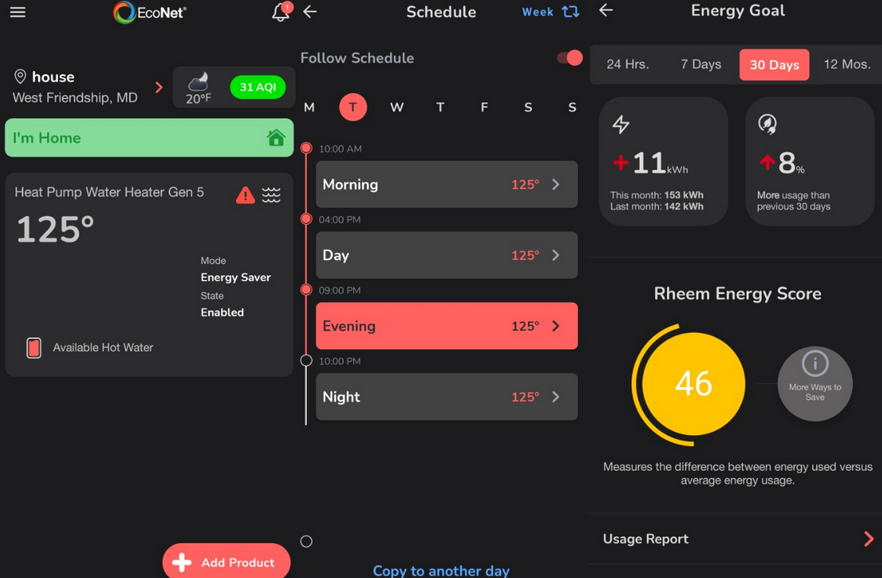
Last week, temperatures in West Friendship, MD dropped to 20°F (-6°C). I checked my Rheem EcoNet app.
- Outdoor Temp: 20°F.
- Basement Temp: ~55°F.
- Water Temp: 125°F (Hot and steady).
The Secret: Even when it’s freezing outside, your basement (where the heater lives) usually stays above 50°F because of the earth’s insulation. The Heat Pump steals that “free heat” from the basement air and puts it into the water. It worked flawlessly in “Energy Saver” mode without needing the expensive backup coils.
2. The Savings: 153 kWh vs. 400 kWh
This is the part that pays for the unit. In the winter, incoming ground water is colder (40°F instead of 70°F). A standard electric heater has to work twice as hard to heat it up.
My Usage Last Month:
- Standard Electric Heater (Estimated): ~400 kWh.
- My Hybrid Rheem: 153 kWh.
That is nearly 60% savings during the coldest month of the year. While my neighbors were paying $50-$60 just to shower, I paid about $20. Over 10 years, this heater will pay for itself three times over.
3. Why “Smart” Saves Money (Time of Use)
The “Smart” features aren’t just for showing off. They are a financial tool. In the winter, electricity prices often spike during “Peak Hours” (usually 4 PM – 9 PM when everyone gets home and turns on the heat).
I programmed my Rheem to do something clever:
- 3:00 PM: It “superheats” the water to 140°F (when power is cheap).
- 4:00 PM – 9:00 PM: It stops heating completely.
- Result: We use the stored hot water for showers and dishes during the expensive hours without paying a cent for electricity.
You can’t do that with a dumb tank. Here are my econet app with the current configuration:
4. Things Nobody Tells You (Installation Tips)
Before you run to Home Depot, know this: A Hybrid Heater is not just a “swap out”.
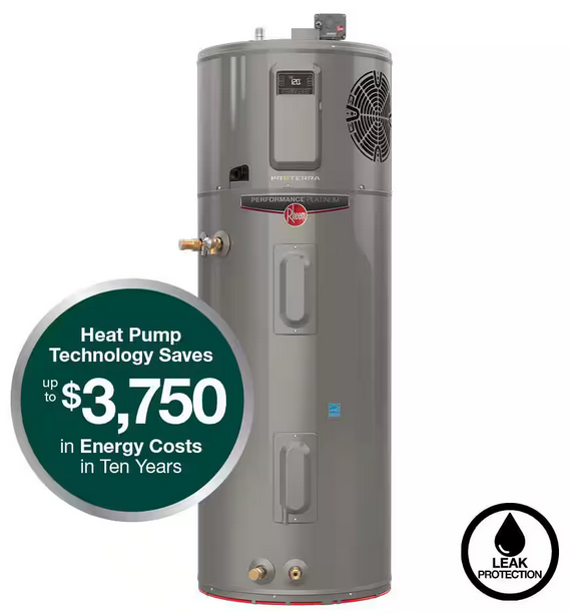
It acts as a Dehumidifier: In the winter, this is great. It keeps my basement dry and smells fresh.
It needs a Condensate Pump: Because it pulls moisture from the air, it drips water. If you don’t have a floor drain, you must buy a little pump to move that water away. [Insert Amazon Link: Little Giant Condensate Removal Pump]
It makes noise: It sounds like a quiet refrigerator running. Don’t put it next to your bedroom wall.
5. Things Nobody Tells You (Installation Tips)
Switching from a standard electric tank to a Hybrid Heat Pump isn’t exactly “plug and play.” Here are two things I wish I knew before the truck arrived.
1. It Needs to Breathe (Airflow) Since this unit sucks heat from the air, you can’t stuff it in a tiny closet. It needs about 700 cubic feet of air space (roughly a 10×10 room).
- The Bonus: Because it sucks heat, it also sucks moisture. My basement used to be damp and musty. Now? It’s bone dry. The heater acts as a massive, free dehumidifier for my whole basement.
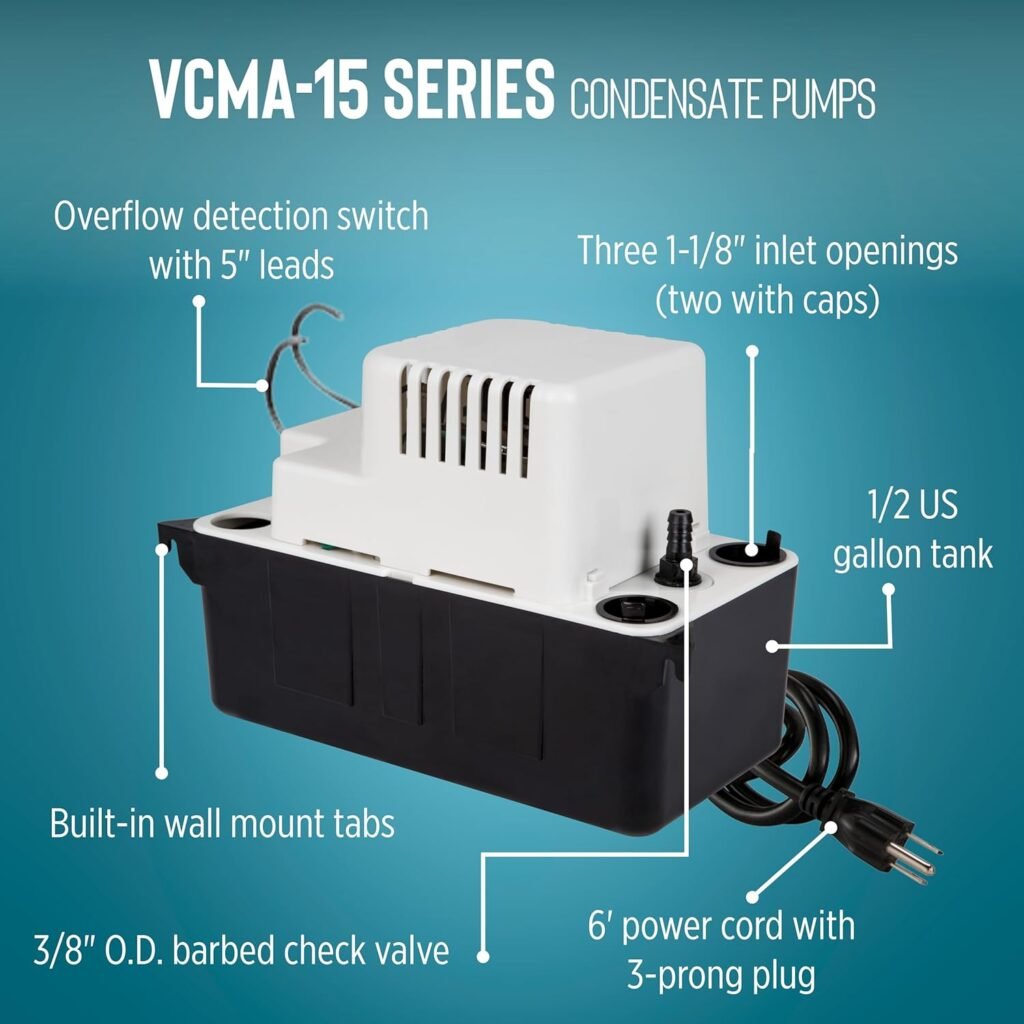
2. It Pees (Condensate) Because it dehumidifies the air, it produces water about a gallon or two a day in the summer. If you have a floor drain next to the heater, great. Run a tube to it. If you don’t have a drain nearby (like me), you need a Condensate Pump. This little box catches the water drips and pumps them up and out of your house (or to a sink). Don’t forget to buy one, or you’ll have a puddle on day one.
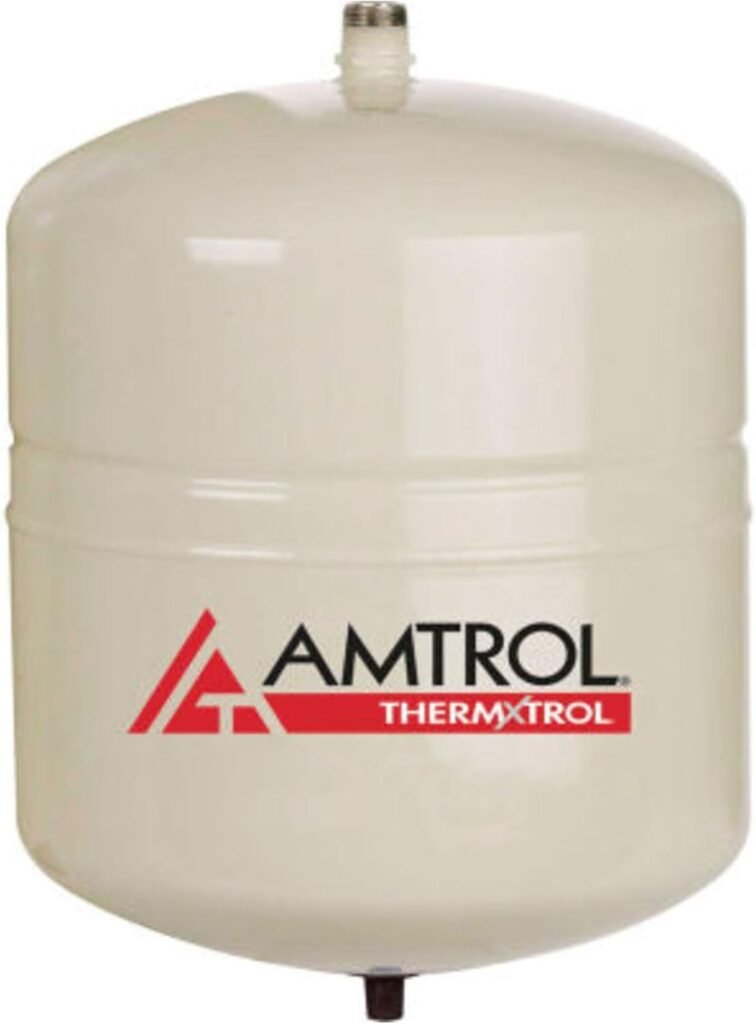
3. You Need Expansion Most modern codes require a “Thermal Expansion Tank” (that little blue ball on top of the pipes). It protects your plumbing from pressure spikes. If you don’t have one, install it now.
Verdict: The Best Winter Upgrade
If your old water heater is struggling this winter, don’t replace it with 1990s technology. The Rheem ProTerra Hybrid is a beast. It handles the cold, protects your basement from leaks, and lowers your bills when you need it most.
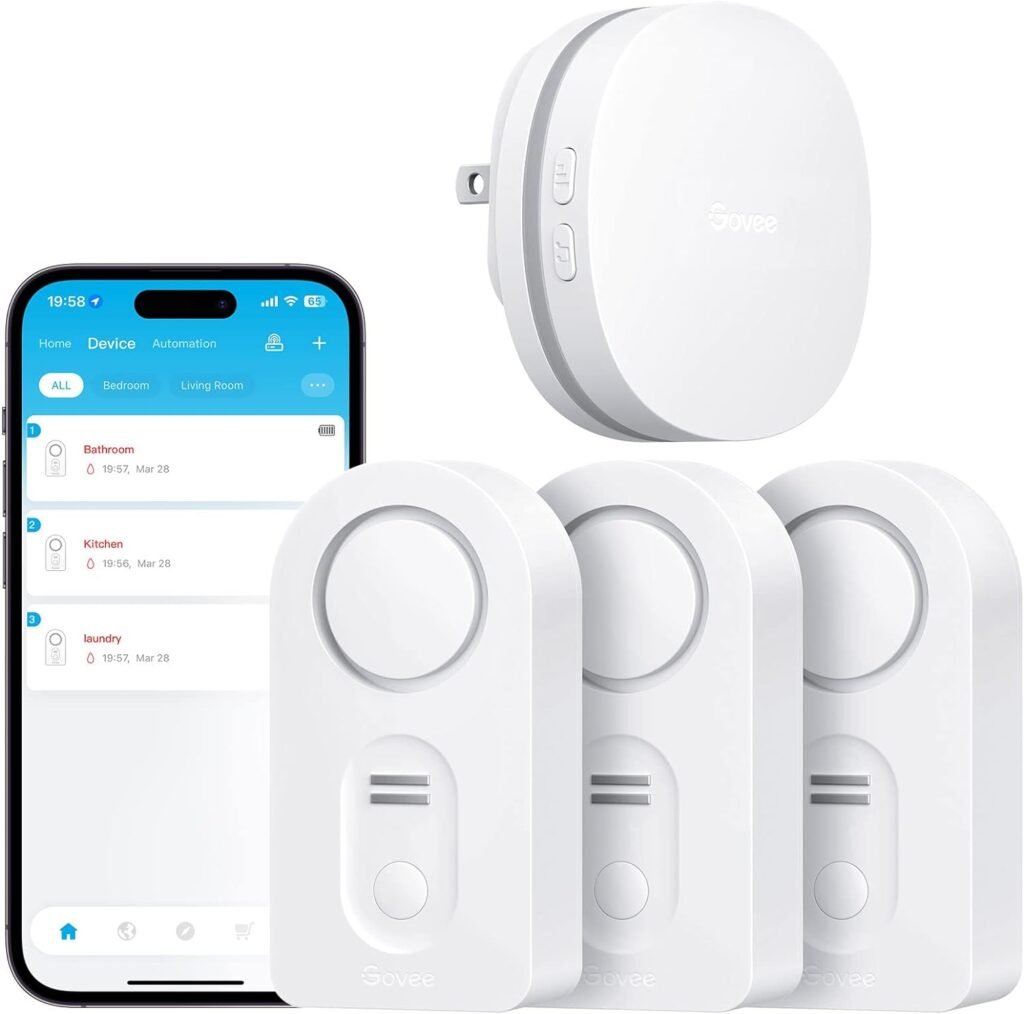
Protect Your Old Tank (The $50 Option): Can’t upgrade yet? At least protect your home from winter pipe bursts with the Govee WiFi Water Leak Detector.